Civil Law in India: Meaning, Scope, and the Jurisdiction of District & Sessions Courts
Dated
0
टिप्पण्या
Civil Law in India: Meaning, Scope, and the Jurisdiction of District & Sessions Courts

Introduction
Civil law forms the backbone of private rights and obligations in India. It governs disputes between individuals, families, companies, and institutions relating to property, contracts, succession, torts, injunctions, declarations, and other non-criminal matters. Unlike criminal law, which addresses offences against the State, civil law primarily seeks compensation, enforcement of rights, or specific relief.
The adjudication of civil disputes in India operates through a structured judicial hierarchy, beginning from Civil Judge Courts and extending up to the Supreme Court of India. Understanding the purpose and jurisdiction of District and Sessions Courts is essential for appreciating how civil justice is delivered at the grassroots level.
What is Civil Law?
Civil law regulates private relationships. Its objectives include:- Enforcement of legal rights
- Protection of property and contractual interests
- Compensation for loss or injury
- Granting equitable relief such as injunctions and declarations
The procedural framework is primarily governed by the Code of Civil Procedure, 1908 (CPC). Substantive rights flow from statutes such as:
- Transfer of Property Act, 1882
- Indian Contract Act, 1872
- Specific Relief Act, 1963
- Hindu Succession Act, 1956
- Easements Act, 1882
- Limitation Act, 1963
Civil courts do not impose imprisonment (except for limited procedural defaults); instead, they grant remedies.
Hierarchy of Civil Courts in India
The structure varies slightly across states, but broadly follows this pattern:

1. Civil Judge (Junior Division)
- Lowest tier civil court
- Handles smaller pecuniary value suits (Less than 5 lakh only)
- Deals with injunction suits, recovery suits, partition matters of lower valuation
2. Civil Judge (Senior Division)
- Higher pecuniary jurisdiction (Greater than 5 Lakh)
- Tries more substantial property and commercial disputes
- Can grant broader declaratory and equitable relief
3. District Court
The District Court is the principal civil court of original jurisdiction in a district. Under the Code of Civil Procedure, it has:- Unlimited pecuniary jurisdiction (subject to state amendments)
- Appellate jurisdiction over decisions of Civil Judge (Junior and Senior Division)
- Supervisory authority over subordinate civil courts
- The District Judge ensures uniformity and legality in civil adjudication within the district.
District & Sessions Court: Dual Role Explained
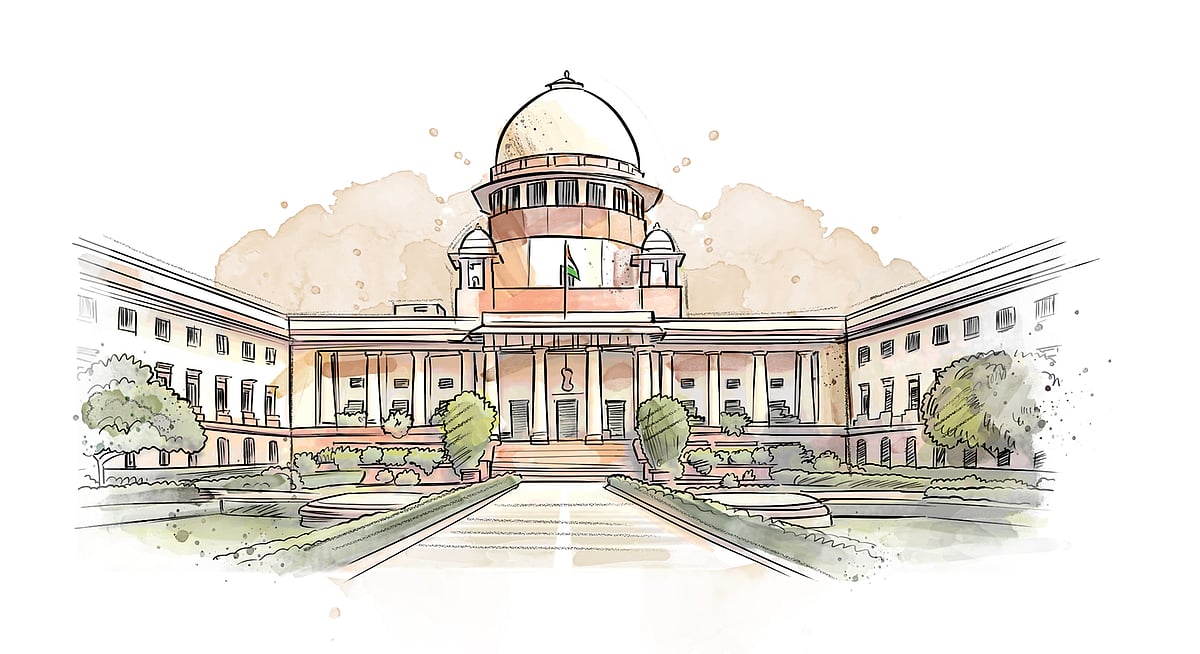
In India, the District Judge often functions in a dual capacity:
As District Judge → exercises civil jurisdiction
As Sessions Judge → exercises criminal jurisdiction
Civil Jurisdiction (District Judge)
- Original jurisdiction in high-value civil disputes
- Appeals from subordinate civil courts
- Guardianship matters
- Probate and succession cases
- Arbitration-related matters under the Arbitration and Conciliation Act
Criminal Jurisdiction (Sessions Judge)
- Tries serious criminal offences
- Hears appeals from Magistrate Courts
Though the designation combines both, the nature of cases distinguishes the role.
Other Important Civil Courts and Tribunals
Family Court
- Marriage, divorce, maintenance, guardianship
- Established under the Family Courts Act, 1984
Commercial Court
- Commercial disputes above specified monetary threshold
- Faster adjudication under Commercial Courts Act, 2015
Small Causes Court
- Recovery of money, tenancy matters of limited scope
High Court
- Appellate jurisdiction over District Courts
- Supervisory jurisdiction under Article 227 of the Constitution
- Original jurisdiction in some states (e.g., Bombay, Delhi, Madras, Calcutta)
Supreme Court of India
- Final appellate authority
- Constitutional interpretation
Purpose of Civil Court Jurisdiction
The jurisdiction of civil courts is guided by:- Territorial Jurisdiction – Where the cause of action arose
- Pecuniary Jurisdiction – Monetary value of the suit
- Subject-Matter Jurisdiction – Nature of the dispute
- Section 9 of CPC establishes that civil courts shall try all suits of a civil nature unless barred expressly or impliedly.
This principle ensures access to justice.
Why District Courts Are the Backbone of Civil Justice
District Courts:
- Serve as the primary forum for justice delivery
- Act as appellate authority for lower courts
- Balance both civil and criminal responsibilities
- Provide proximity-based access to litigants
In districts like Sangamner and other semi-urban regions, the District & Sessions Court becomes the nucleus of dispute resolution, shaping local jurisprudence and legal awareness.
Contemporary Relevance
With increasing commercialisation, property transactions, and contractual relations, civil litigation is expanding. Courts are adapting through:- E-filing systems
- Digital evidence acceptance
- Case management reforms
- Alternative Dispute Resolution mechanisms
- Civil law continues evolving to meet societal and economic demands.
Conclusion
Civil law is not merely a set of procedural rules it is the framework through which rights are recognised and enforced. The District & Sessions Court plays a pivotal role in maintaining justice at the district level, ensuring that individuals and institutions can seek lawful remedies efficiently.
Understanding jurisdiction is essential not only for litigants but also for law students, researchers, and practitioners who aim to appreciate the structural design of Indian civil justice.
टिप्पणी पोस्ट करा