Intellectual Property Rights Laws: A Comprehensive Guide for Legal Professionals and Innovators
Dated
0
टिप्पण्या
Intellectual Property Rights Laws: A Comprehensive Guide for Legal Professionals and Innovators
Introduction to Intellectual Property
Intellectual property (IP) represents one of the most significant aspects of modern commerce and innovation. In an increasingly digital and knowledge-driven economy, understanding intellectual property laws is essential for anyone engaged in creative work, business development, or legal practice. India's intellectual property framework provides robust protection across multiple categories of creative and innovative works, serving as a foundation for economic growth, technological advancement, and cultural preservation.
What is Intellectual Property?
Intellectual property refers to creations of the mind—inventions, literary and artistic works, designs, symbols, names, and images used in commerce—that are granted legal protection. Unlike tangible property that exists in physical form, intellectual property is intangible but derives significant economic value. The fundamental principle underlying IP law is that creators and innovators should receive recognition and compensation for their intellectual contributions, which in turn incentivizes further innovation and creative activity.
The importance of intellectual property protection has grown exponentially over the past two decades. The World Trade Organization's Agreement on Trade-Related Aspects of Intellectual Property Rights (TRIPS), which India ratified upon joining the WTO, established minimum standards for IP protection globally and created a framework for enforcement that recognizes IP as crucial to economic development.
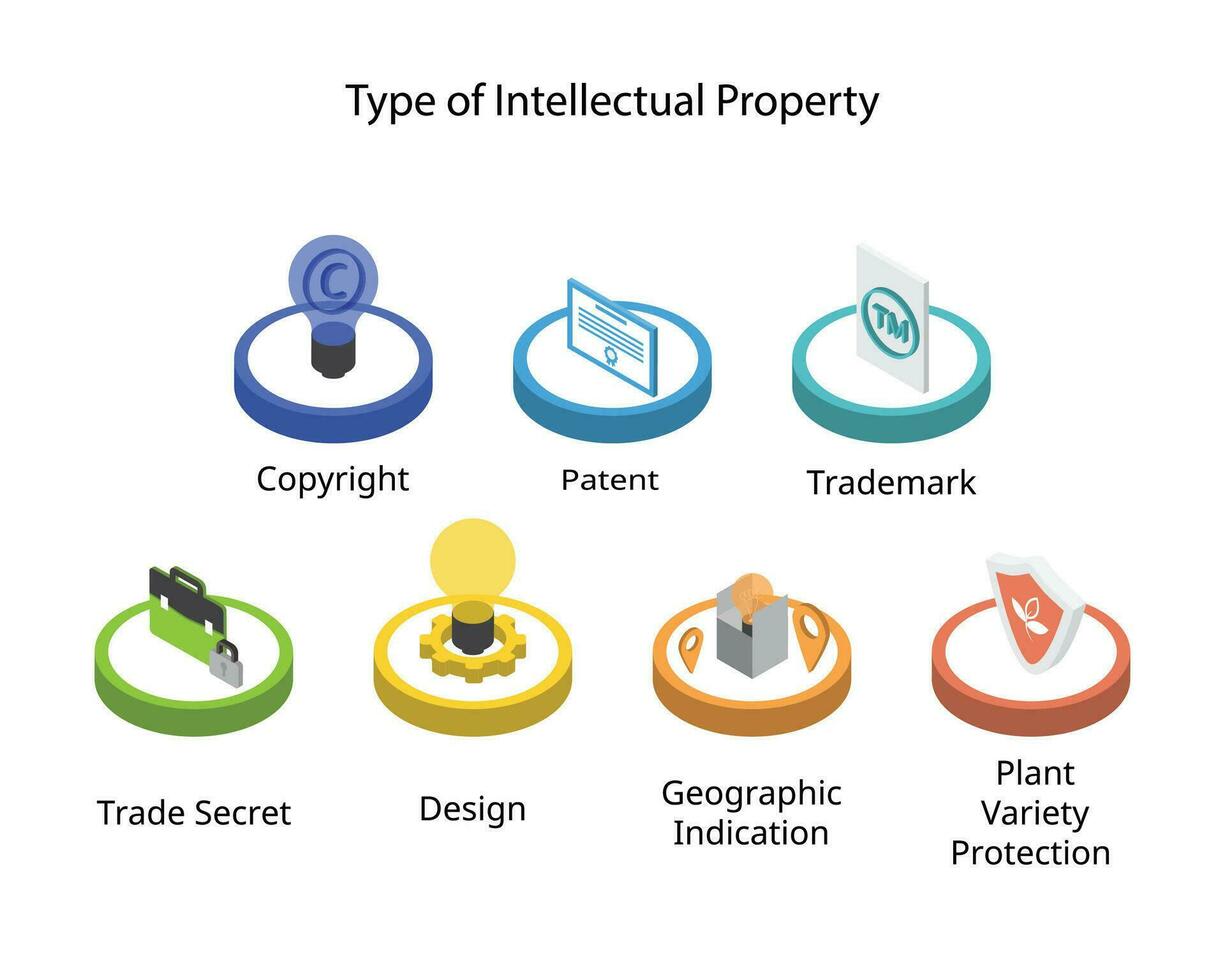
Type Of Intellectual Property Rights such as copyright
Indian intellectual property law protects four main categories of creations and innovations, each governed by distinct statutes and offering different types of protection:
Patents
A patent is a legal protection that grants inventors exclusive rights to their inventions for a specified period. In India, patents are regulated under the Patents Act, 1970, as amended. Patents protect novel, non-obvious inventions that have industrial utility and can be applied across all fields of technology—from pharmaceuticals and machinery to software and biotechnology.
Patents grant inventors several critical rights: the exclusive right to prevent others from manufacturing, using, selling, or importing the patented invention; the ability to monetize the invention through licensing or assignment; and legal recourse against infringement through damages. The term of patent protection in India extends for 20 years from the date of filing the application, providing substantial protection for the inventor's investment in research and development.
Patent protection requires registration with the Patent Office. Unlike some forms of IP, patent protection is not automatic—an inventor must file an application, pay fees, and undergo examination by the Patent Office before receiving a patent grant. This examination process ensures that only inventions meeting the stringent criteria of novelty, inventive step (non-obviousness), and industrial applicability receive protection.
Trademarks
A trademark is any symbol, word, phrase, design, or combination thereof that distinguishes the source of goods or services of one enterprise from those of others. Trademarks protect brand identity and consumer goodwill, allowing businesses to maintain their market reputation and prevent consumer confusion.
In India, trademarks are protected under the Trademarks Act, 1999, which modernised the earlier trademark law and brought India into compliance with international IP standards. Registered trademarks grant owners the exclusive right to use the mark and to prevent others from using identical or confusingly similar marks on goods or services that are the same or similar. Trademark protection requires registration, though the law recognises both registered and unregistered trademarks through the doctrine of "passing off."
The duration of trademark protection in India is 10 years from the date of registration, and trademark registrations can be renewed indefinitely for successive 10-year periods by paying the requisite renewal fees. This perpetual renewal structure reflects the recognition that brand value can last indefinitely if properly maintained and protected.
Recent amendments to the Trademarks Act have significantly strengthened enforcement. The law now addresses infringement through a broader definition that includes unauthorised use of similar or confusingly similar marks, provides enhanced police powers to seize infringing goods without a warrant, and imposes stricter penalties for infringement.
Copyrights
Copyright protects original works of authorship including literary works, musical compositions, dramatic works, artistic works, cinematograph films, and sound recordings. In India, copyright is governed by the Copyright Act, 1957, which has been amended multiple times, most recently through the Copyright (Amendment) Act, 2012.
A defining characteristic of copyright protection is that it arises automatically upon creation of the work—no registration or formal procedures are required for copyright to vest in the creator. The moment you create an original work in tangible form, copyright protection attaches automatically. However, voluntary registration is advisable as it provides prima facie evidence of ownership and strengthens the legal position in infringement disputes.
Copyright grants creators multiple exclusive rights: the right to reproduce the work, the right to prepare derivative works based on the original, the right to distribute copies of the work, the right to perform the work publicly, and the right to display the work publicly. Additionally, authors possess "moral rights"—the right to claim authorship and the right to object to derogatory treatment of the work.
In India, copyright protection extends for the life of the author plus 60 years after the author's death. This extended duration reflects the recognition that creative works often appreciate in value over time and that the legacy of an author should benefit their heirs.
Trade Secrets
Trade secrets protect confidential business information that provides a competitive advantage—such as manufacturing processes, customer lists, business strategies, recipes, software code, or proprietary data. Unlike patents, trademarks, and copyrights, trade secrets need not be registered to receive protection.
Trade secrets can be protected for an unlimited period of time, provided that the information remains confidential and derives independent economic value from not being generally known. Protection requires that reasonable measures be taken to maintain the secrecy of the information. The Semiconductor Integrated Circuits Layout Design Act, 2000, and broader civil law provide remedies against misappropriation of trade secrets through breach of confidence or unfair competition doctrines.
India's Comprehensive Intellectual Property Framework
Beyond the four primary categories, India's IP regime includes additional specialized protections addressing modern economic realities:
Industrial Designs
The Designs Act, 2000, protects the ornamental or visual appearance of industrial products. Design protection covers the aesthetic aspects of a product that are novel and original—the shape, configuration, pattern, or ornament applied to an article. Design registration is mandatory for protection, and registered designs receive protection for 10 years, renewable for a further 5 years.
Geographical Indications
Geographical Indications (GIs) protect goods that have particular qualities or characteristics attributable to their geographic origin. The Geographical Indications of Goods (Registration and Protection) Act, 1999, establishes the legal framework. Famous examples include Darjeeling tea, Basmati rice, and Chanderi silk, which receive protection against unauthorized use by entities outside the designated geographic region.
Recent developments in 2025 have significantly enhanced GI protection in India. The government amended the GI Rules to introduce a consolidated fee structure with reduced statutory fees, making GI registration more accessible. Additionally, new draft guidelines have expanded eligible users of GI marks to include intermediaries such as dealers, packagers, and exporters acting with the authorization of producers.
Plant Varieties and Farmers' Rights
The Protection of Plant Varieties and Farmers' Rights Act, 2001, protects new plant varieties developed through research and breeding, while simultaneously protecting the rights of farmers who develop varieties through traditional practices. This legislation balances the interests of plant breeders with the agricultural heritage of farming communities.
Semiconductor Integrated Circuits Layout Designs
The Semiconductor Integrated Circuits Layout Design Act, 2000, protects the layout designs of integrated circuits used in electronic devices. As India's technology sector has grown, protection for semiconductor designs has become increasingly important for fostering innovation in microelectronics and IT.
Duration and Term of Protection: A Comparative Overview
Type of IP
Duration of Protection Renewal Possible
Patents 20 years from filing date, No renewal; single term
Trademarks 10 years from registration. Yes, indefinitely renewable
Copyrights Life of author + 60 years Automatic; no renewal needed
Designs 10 years + 5 years renewal. Yes, one renewal period
Geographical Indications 10 years from registration Yes, indefinitely renewable
Trade Secrets Unlimited (if kept confidential) N/A; indefinite protection
The Indian IP Regulatory Framework
Recent Amendments and Developments
Artificial Intelligence and Copyright
Geographical Indications Expansion
Registration Requirements and Procedures
Enforcement of Intellectual Property Rights
Key Statutes Governing Indian Intellectual Property Law
The Indian IP regime is structured around several principal statutes:
Patents Act, 1970 (as amended in 1995, 1999, 2002, 2005, and subsequently)
Trademarks Act, 1999
Copyright Act, 1957 (as amended multiple times, including the Copyright Amendment Act, 2012)
Designs Act, 2000
Geographical Indications of Goods (Registration and Protection) Act, 1999
Protection of Plant Varieties and Farmers' Rights Act, 2001
Semiconductor Integrated Circuits Layout Design Act, 2000
Biological Diversity Act, 2002
Jan Vishwas (Amendment of Provisions) Act, 2023 (decriminalized certain IP provisions effective August 1, 2024)
The TRIPS Agreement and International Harmonisation
Intellectual Property Filings: India's Growing Innovation Ecosystem
Challenges and Future Directions
Practical Implications for Legal Professionals and Innovators
For lawyers advising clients, comprehensive knowledge of India's IP framework is essential. This knowledge enables professionals to:
For innovators and creators, understanding IP law offers concrete benefits: establishing legal ownership of creations, generating revenue through licensing, preventing unauthorised use, and building valuable IP portfolios that enhance business valuation.
Conclusion
Trademarks 10 years from registration. Yes, indefinitely renewable
Copyrights Life of author + 60 years Automatic; no renewal needed
Designs 10 years + 5 years renewal. Yes, one renewal period
Geographical Indications 10 years from registration Yes, indefinitely renewable
Trade Secrets Unlimited (if kept confidential) N/A; indefinite protection
The Indian IP Regulatory Framework
India's intellectual property rights are administered by the Controller General of Patents, Designs and Trademarks (CGPDTM), who operates under the Department of Industrial Policy and Promotion (DIPP) within the Ministry of Commerce and Industry. The CGPDTM oversees patent examination, trademark registration, design registration, and geographical indication protection.
In 2021, India abolished the Intellectual Property Appellate Board (IPAB) and transferred appellate jurisdiction to the High Courts. This restructuring has streamlined appeals and enhanced the judicial quality of IP decision-making. The Delhi High Court established a dedicated Intellectual Property Division specifically to hear IP matters, setting a precedent for improved IP adjudication across India.
Recent Amendments and Developments
India's intellectual property landscape has undergone significant reforms in recent years, reflecting the country's commitment to strengthening IP protection while addressing modern challenges.
Computer-Related Inventions
In 2025, the Patent Office released comprehensive Guidelines for the Examination of Computer-Related Inventions (CRIs), providing detailed procedures for examining software patents and AI-related inventions. These guidelines, complete with illustrative examples, assist patent examiners in assessing CRI applications fairly and consistently.
Artificial Intelligence and Copyright
The Ministry of Commerce and Industry has clarified that India's existing intellectual property regime is well-equipped to protect AI-generated works and address copyright infringement by generative AI systems. This position acknowledges that IP laws can adapt to emerging technologies without requiring entirely new legislation.
Geographical Indications Expansion
As noted above, 2025 saw major developments in India's GI regime, including reduced registration fees and expanded eligibility criteria for GI users. These changes reflect the government's recognition of GI's importance for protecting India's traditional and artisanal products in global markets.
Registration Requirements and Procedures
The registration requirements vary significantly across different types of intellectual property:
Patents: Mandatory registration with the Patent Office. The process typically involves filing a complete specification, substantive examination, publication, and grant of patent. Average examination period: 2-5 years.
Trademarks: Mandatory registration. The process includes filing, examination for absolute grounds of refusal, publication, opposition period (4 months), and eventual registration. Average registration period: 12-18 months.
Copyrights: Automatic protection upon creation; voluntary registration with the Copyright Office. Registration provides prima facie evidence of ownership but is not necessary for protection to arise.
Designs: Mandatory registration. The examination is less stringent than for patents, focusing on novelty and non-similarity to prior designs. Average registration period: 6-12 months.
Geographical Indications: Registration with the GI Registry. The process involves filing, examination, publication, and registration. Protection requires proof that goods possess specific characteristics attributable to geographic origin.
Enforcement of Intellectual Property Rights
India provides both civil and criminal remedies for intellectual property infringement. Civil remedies include injunctions (temporary and permanent), damages, and accounts of profits. Criminal penalties, formerly more severe, have been decriminalised in certain provisions following the Jan Vishwas Amendment Act, 2023.
Recent judicial trends demonstrate India's courts are actively strengthening IP enforcement. In 2025, India's IP jurisprudence continued to evolve, with courts taking stricter views on patent claim amendments, enforcing high standards in trademark protection, and balancing enforcement with public health imperatives. This judicial rigor provides confidence to IP owners pursuing enforcement actions.
Key Statutes Governing Indian Intellectual Property Law
The Indian IP regime is structured around several principal statutes:
Patents Act, 1970 (as amended in 1995, 1999, 2002, 2005, and subsequently)
Trademarks Act, 1999
Copyright Act, 1957 (as amended multiple times, including the Copyright Amendment Act, 2012)
Designs Act, 2000
Geographical Indications of Goods (Registration and Protection) Act, 1999
Protection of Plant Varieties and Farmers' Rights Act, 2001
Semiconductor Integrated Circuits Layout Design Act, 2000
Biological Diversity Act, 2002
Jan Vishwas (Amendment of Provisions) Act, 2023 (decriminalized certain IP provisions effective August 1, 2024)
The TRIPS Agreement and International Harmonisation
India's intellectual property laws have been significantly shaped by the Agreement on Trade-Related Aspects of Intellectual Property Rights (TRIPS) administered by the World Trade Organization. TRIPS sets minimum standards for IP protection and enforcement that all WTO members must meet. India's compliance with TRIPS has necessitated reforms across all major IP statutes to strengthen protection standards, harmonize procedures, and improve enforcement mechanisms.
The international IP system, anchored by organizations such as the World Intellectual Property Organization (WIPO), facilitates global cooperation in IP protection. India participates actively in international IP frameworks, including the Paris Convention for Protection of Industrial Property (since 1998) and the Berne Convention for Literary and Artistic Works.
Intellectual Property Filings: India's Growing Innovation Ecosystem
India's intellectual property landscape reflects the country's emerging position as a global innovation hub. According to recent data, India's IP filings rose by 44% over the past five years, led by a remarkable 380% surge in Geographical Indications. This growth demonstrates increased awareness of IP protection among creators, innovators, and traditional knowledge holders.
Patent filings have shown consistent growth, particularly in sectors such as information technology, pharmaceuticals, and renewable energy. Trademark registrations continue to surge as Indian businesses expand globally and recognise the importance of brand protection. Copyright registrations, though not mandatory, are increasingly utilised by creators seeking to establish formal proof of ownership.
Challenges and Future Directions
Despite significant progress, India's IP system faces ongoing challenges. Procedural delays in patent examination and trademark registration, though improving, remain a concern for applicants. Counterfeiting and piracy continue to threaten IP owners, particularly in industries such as pharmaceuticals and consumer goods. Access to justice remains an issue in many parts of the country due to limited specialised IP courts.
India's National Intellectual Property Policy, approved in 2016, outlines a vision for stronger IP protection while fostering innovation and traditional knowledge preservation. Future developments are expected to include:
- Enhanced enforcement mechanisms through specialised IP courts with technically trained judges
- Strengthened coordination between law enforcement, customs authorities, and IP offices
- Dedicated IP funding to support innovation in remote and underserved regions
- Greater international collaboration with WIPO and other global IP bodies
- Holistic review of existing policies to address emerging technologies and innovation trends
Practical Implications for Legal Professionals and Innovators
For lawyers advising clients, comprehensive knowledge of India's IP framework is essential. This knowledge enables professionals to:
- Counsel clients on which form of IP protection best suits their creations or inventions
- Guide clients through registration procedures and timelines
- Develop IP strategies incorporating multiple forms of protection
- Enforce IP rights through civil and criminal remedies
- Navigate international IP frameworks for cross-border protection
For innovators and creators, understanding IP law offers concrete benefits: establishing legal ownership of creations, generating revenue through licensing, preventing unauthorised use, and building valuable IP portfolios that enhance business valuation.
Conclusion
Intellectual property law in India represents a sophisticated and evolving framework designed to protect creativity and innovation across multiple domains. From patents safeguarding technical inventions to copyrights protecting artistic works, from trademarks establishing brand identity to geographical indications preserving traditional knowledge, India's IP regime provides comprehensive legal protection that stimulates innovation, rewards creators, and supports economic development.
As India's position in the global knowledge economy strengthens, intellectual property protection becomes increasingly vital for businesses, creators, and innovators. Understanding the nuances of patents, trademarks, copyrights, trade secrets, and specialised IP forms enables legal professionals and business leaders to navigate this complex landscape effectively, protect their valuable intellectual assets, and contribute to India's emergence as an innovation and creative economy powerhouse.
The trajectory of India's IP development—from colonial-era origins through post-independence legislation to modern, TRIPS-compliant frameworks—demonstrates a commitment to balancing creator rights with public interests. As technology evolves and India's innovation ecosystem expands, the legal system continues to adapt, ensuring that intellectual property protection remains robust, fair, and aligned with global best practices.
Ref:
https://blog.ipleaders.in/need-know-ipr-laws-india/
https://brewerlong.com/information/business-law/four-types-of-intellectual-property/
https://thelegalschool.in/blog/types-of-intellectual-property
https://blog.ipleaders.in/all-about-intellectual-property-rights-ipr/
https://www.setindiabiz.com/blog/intellectual-property-law
https://provakil.com/blog/intellectual-property-laws-of-india/
https://en.wikipedia.org/wiki/Intellectual_property_in_India
https://www.cnbc.com/select/trademarks-copyrights-patents-heres-what-they-protect/
https://copyrightalliance.org/faqs/difference-copyright-patent-trademark/
https://visionias.in/current-affairs/monthly-magazine/2025-08-19/economics-(indian-economy)/intellectual-property-rights-ipr-in-india
https://spicyip.com/2025/12/a-look-back-at-indias-top-ip-developments-of-2025.html
https://practiceguides.chambers.com/practice-guides/trade-marks-copyright-2025/india/trends-and-developments
https://spicyip.com/2024/12/a-look-back-at-indias-top-ip-developments-of-2024.html
https://www.anandandanand.com/news-insights/chambers-trademarks-copyright-2025-trends-and-developments/
https://singhanialaw.com/india-ip-newsletter-june-2025/
https://stfrancislaw.com/blog/intellectual-property-rights/
https://brewerlong.com/information/business-law/four-types-of-intellectual-property/
https://thelegalschool.in/blog/types-of-intellectual-property
https://blog.ipleaders.in/all-about-intellectual-property-rights-ipr/
https://www.setindiabiz.com/blog/intellectual-property-law
https://provakil.com/blog/intellectual-property-laws-of-india/
https://en.wikipedia.org/wiki/Intellectual_property_in_India
https://www.cnbc.com/select/trademarks-copyrights-patents-heres-what-they-protect/
https://copyrightalliance.org/faqs/difference-copyright-patent-trademark/
https://visionias.in/current-affairs/monthly-magazine/2025-08-19/economics-(indian-economy)/intellectual-property-rights-ipr-in-india
https://spicyip.com/2025/12/a-look-back-at-indias-top-ip-developments-of-2025.html
https://practiceguides.chambers.com/practice-guides/trade-marks-copyright-2025/india/trends-and-developments
https://spicyip.com/2024/12/a-look-back-at-indias-top-ip-developments-of-2024.html
https://www.anandandanand.com/news-insights/chambers-trademarks-copyright-2025-trends-and-developments/
https://singhanialaw.com/india-ip-newsletter-june-2025/
https://stfrancislaw.com/blog/intellectual-property-rights/
टिप्पणी पोस्ट करा